Cet article n'est pas encore disponible dans votre langue. Version anglaise affichée.
The Impact of Branding and Storytelling on Consumer Trust in Ecommerce
Explore how branding and storytelling build consumer trust in ecommerce through search-intent content, expert credibility, customer stories, and emotional narratives.
Let’s admit something most marketers consciously avoid: Consumers have developed a quiet, ruthless immunity to persuasion. They’ve clicked past enough countdown timers and “handcrafted with love” taglines to spot theater from a mile away.
Yet these same people will happily wire money to a stranger for a handmade rug they saw on a grainy Instagram story. That’s because that rug comes wrapped in a belief, not a pitch.
Ecommerce has a strange paradox at its core. The mechanics of buying online are colder and more transactional than any face-to-face exchange in history. There’s no eye contact, no banter, and no physical proof.
However, some brands still thrive in this sterile environment because they know how to lean into warmth, personality, and narrative. They replace the missing human moment with something almost better – a coherent identity that feels consistent, intentional, and true.
This article looks at how brand storytelling influences consumer trust in ecommerce, what elements matter most, and how to apply them in a practical way.
Write for the Person Searching, Not the Algorithm
Most brands stuff their blogs with content they want to write. Sharp brands publish what their customers actually type into Google at 11 p.m. on a Tuesday. The difference shows up in your revenue.
Optimizing content around genuine search intent (the precise phrases and questions your audience uses) can boost your conversion rates by up to 350%. That lift is a consequence of showing up with the exact answer at the exact moment someone needs it.
Here’s how you implement this for your own store:
- Start by scraping real queries.
- Pull “People Also Ask” boxes from Google, mine customer service emails, and dig into your site’s internal search logs. You’ll find gems like “Does this moisturizer pill under makeup?” or “When will my package actually arrive?” Those awkward, specific questions are your editorial calendar.
- Write posts that answer one question thoroughly instead of ten questions superficially.
- Match the format to the intent. You can use a quick bulleted guide for navigational queries or a deeper explanation for informational ones.
- Above all, resist the urge to shoehorn product links into every paragraph. Trust arrives when helpfulness leads and selling follows.
As an example of how this works, take a look at Sky and Sol, a brand crafting natural, tallow-based skincare.
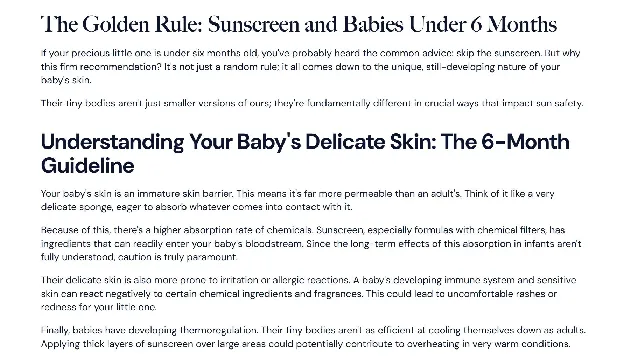
They understand their core audience includes parents navigating infant skincare with extreme caution. So they published “When Can Babies Wear Sunscreen?” – a post laser-focused on one narrow parental anxiety.
This article doesn’t meander through general sun safety tips or vaguely celebrate summer vibes. It names pediatric guidelines, breaks down ingredient concerns, and offers clear, sequential age-based recommendations.
Parents land on that page feeling seen and immediately recognize Sky and Sol as a company that respects their vigilance. When those same parents later shop for a safe moisturizer, they remember who helped them first.
Source: skyandsol.co
Borrow Credibility Instead of Chasing It
Your brand can only claim expertise for so long before an audience starts squinting with skepticism. Most shoppers have heard some version of “we’re the best” enough times to develop a permanent filter against it.
Smart brands step aside and let someone with unborrowed authority do the talking. When you invest in expert-driven content, you build a form of loyalty that’s emotionally grounded and, when combined with other strategies, directly contributes to stronger customer relationships. An expert’s voice carries a weight your own self-promotion never will.
Here’s how you implement this for your own store:
- Identify the voices your audience already trusts. These can be formulators, industry analysts, seasoned practitioners, or even skeptical reviewers with deep credentials.
- Reach out with a specific, narrow prompt that plays to their unique lens.
- Don’t ask for a generic endorsement. Ask what they notice that others miss.
- Record the conversation, quote them extensively, and frame the piece around their insight rather than your product.
- When you publish, tag them prominently and let their credibility transfer to your platform. Your role shrinks to that of an intelligent curator, and the audience rewards that humility with trust.
Scentbird, a monthly perfume subscription service connecting customers with designer scents, demonstrates this approach with surgical precision. They published “What Makes a Fragrance Addictive? Perfumer Victoria Belim-Frolova of Bois de Jasmin Explains,” handing the narrative reins to a respected industry nose.
The piece doesn’t funnel readers toward a subscription pitch. Instead, it explores the psychology of scent attachment and dismantles myths around seduction with a specialist’s nuance. Belim-Frolova discusses olfactory memory and emotional triggers in ways no generic fragrance guide could match.
As a result, readers walk away educated, intrigued, and quietly convinced that Scentbird must understand perfume deeply if they know which experts to platform. That way, the brand earns trust without ever asking for it directly.
Source: scentbird.com
Hand Your Customers the Megaphone
Marketing teams exhaust themselves trying to manufacture relatability. They workshop taglines, study demographics, and still produce copy that lands with the emotional thud of a corporate memo.
Meanwhile, your actual customers are out there living the exact stories that would make your brand feel real. The fix requires restraint – stop narrating your customers’ lives for them and simply let them speak. When a real person describes their messy, unfiltered experience, other customers recognize themselves in the frame and trust follows naturally.
Here’s how you implement this for your own store:
- Find customers whose experiences genuinely reflect a dimension of your product’s role in daily life.
- Approach them with open-ended prompts: “Walk us through your evening routine” or “What does rest actually look like for you right now?”
- Record their answers faithfully. Preserve their verbal quirks, their specific struggles, and the particular way they describe a problem your product happens to solve.
- Structure the resulting piece as a first-person narrative or a lightly edited Q&A.
- Resist every impulse to insert product mentions. If your moisturizer appears, it appears because the customer named it, not because your editor shoehorned a link.
Lunya, a brand specializing in elevated sleepwear and loungewear, executes this with notable discipline. Their piece “Diary of a (Sleepy) Mom: Stephanie” follows a customer named Stephanie through the exhausted rhythms of early parenthood.
The post doesn’t mention any thread counts, fabric innovations, or seasonal collections. It simply documents her relationship with sleep, the stolen moments of quiet, and the rituals she clings to during a chaotic season of life.
Mothers reading the piece feel an immediate jolt of recognition. They see their own tired reflection in Stephanie’s story and, without any overt persuasion, understand Lunya as a brand that genuinely grasps what rest means for people juggling real responsibilities.
That quiet alignment converts more gracefully than any product description ever could.
Source: lunya.co
Let Emotion Do the Heavy Lifting
Logic convinces nobody to fall in love. Shoppers compare specs, read reviews, and crunch numbers with the calculating part of their brain, sure. But the decision to trust a brand, to bookmark it, and to return to it, happens somewhere deeper.
Emotion triggers that shift. When a piece of content makes someone feel seen, nostalgic, hopeful, or even heartbroken for the right reasons, the brand behind it stops being a vendor and starts being a presence worth keeping close.
Here’s how to implement emotional storytelling without veering into manipulation:
- Recognize the genuine emotional currents already running through your customers’ lives and your brand’s reason for existing.
- Ask yourself what your product protects people from, or what version of themselves it lets them access. Fear of aging, longing for connection, pride in craftsmanship, or relief at finding a solution are all valid entry points.
- Then craft content that honors those feelings directly.
- Write about the person, not the product.
- Use specific, grounded details, like a grandmother’s hands, a child’s first lost tooth, or the quiet exhale after a long shift.
- Avoid sentimental language and let the circumstances carry the weight.
- Structure the piece so the emotional peak arrives before any mention of what you sell, and keep any CTA close to invisible.
Archive-led ecommerce brands can use the same emotional route without inventing a story. The Menu Press, which sells archival menu prints based on public-domain dining history, makes the product feel more valuable by tying each print to provenance, nostalgia, and a real moment from the past.
Patagonia, a brand synonymous with outdoor gear and environmental activism, demonstrates this masterfully with their story “Free to Breathe.” The piece profiles Nalleli Cobo, a young activist who grew up across the street from an oil-well operation in South Los Angeles.
Patagonia hands her the narrative completely. She describes sleeping upright in a chair to avoid choking on her own nosebleeds, wearing a heart monitor at age ten, and eventually battling a rare reproductive cancer linked to the toxic air she breathed her entire childhood.
The article never pivots to sell a fleece jacket or hiking boots. It simply documents a community’s fight against environmental racism and ends with a call to vote for climate action. Readers finish that story feeling raw, informed, and deeply aligned with Patagonia’s mission.
This way, the brand earns loyalty by proving it stands for something larger than commerce.
Source: patagonia.com
Final Thoughts
So, there’s your blueprint:
- Write for the questions your customers actually ask.
- Borrow credibility from voices they already trust.
- Hand your customers the mic and let their stories do the selling.
- Connect on an emotional level that transcends features and pricing.
Each of these approaches shares a common thread. They all treat trust as something you earn through generosity, not something you extract through persuasion.
The brands that understand this distinction will keep their spot in ecommerce long after the discount codes expire and the ad budgets dry up.
Now, pick the approach that fits where your brand is right now and do it well. The rest will follow.