Google I/O 2025: E-Commerce Impact Analysis by kua.ai
Discover how Google I/O 2025’s AI innovations—AI Search Mode, Virtual Try-On, Agentic Checkout, Gemini 2.5, and more—will transform e-commerce strategies for brands, merchants, and marketplaces.
Introduction: Who Should Read This Article?
The e-commerce landscape is evolving at breakneck speed. What worked yesterday may not work tomorrow, especially as artificial intelligence continues to reshape how consumers discover, evaluate, and purchase products online. This comprehensive blog post is tailored for all e-commerce professionals—from direct-to-consumer (DTC) brand owners and Shopify site operators to SEO specialists, marketplace sellers (Amazon, Walmart, and beyond), dropshippers, and Google Shopping media buyers. If you’re responsible for driving organic traffic, optimizing conversion funnels, or crafting compelling product experiences, the announcements from Google I/O 2025 will have profound implications for your strategies in the coming months and years.
As AI-driven discovery becomes more important, many merchants are also investing in high-converting Shopify themes to improve storefront experience and turn AI-generated traffic into actual sales.
Which Google I/O 2025 release are you most interested in?
[ ] AI Search Mode
[ ] Virtual Try-On
[ ] AI Agent Checkout
[ ] Price Tracking
[ ] Gemini Live & 2.5
[ ] Project Astra Assistant
[ ] Stitch AI & SynthID
[ ] Android XR Glasses
[ ] Workspace AI
Submit
1. Quick Recap: Key Google I/O 2025 Releases (May 21, 2025)
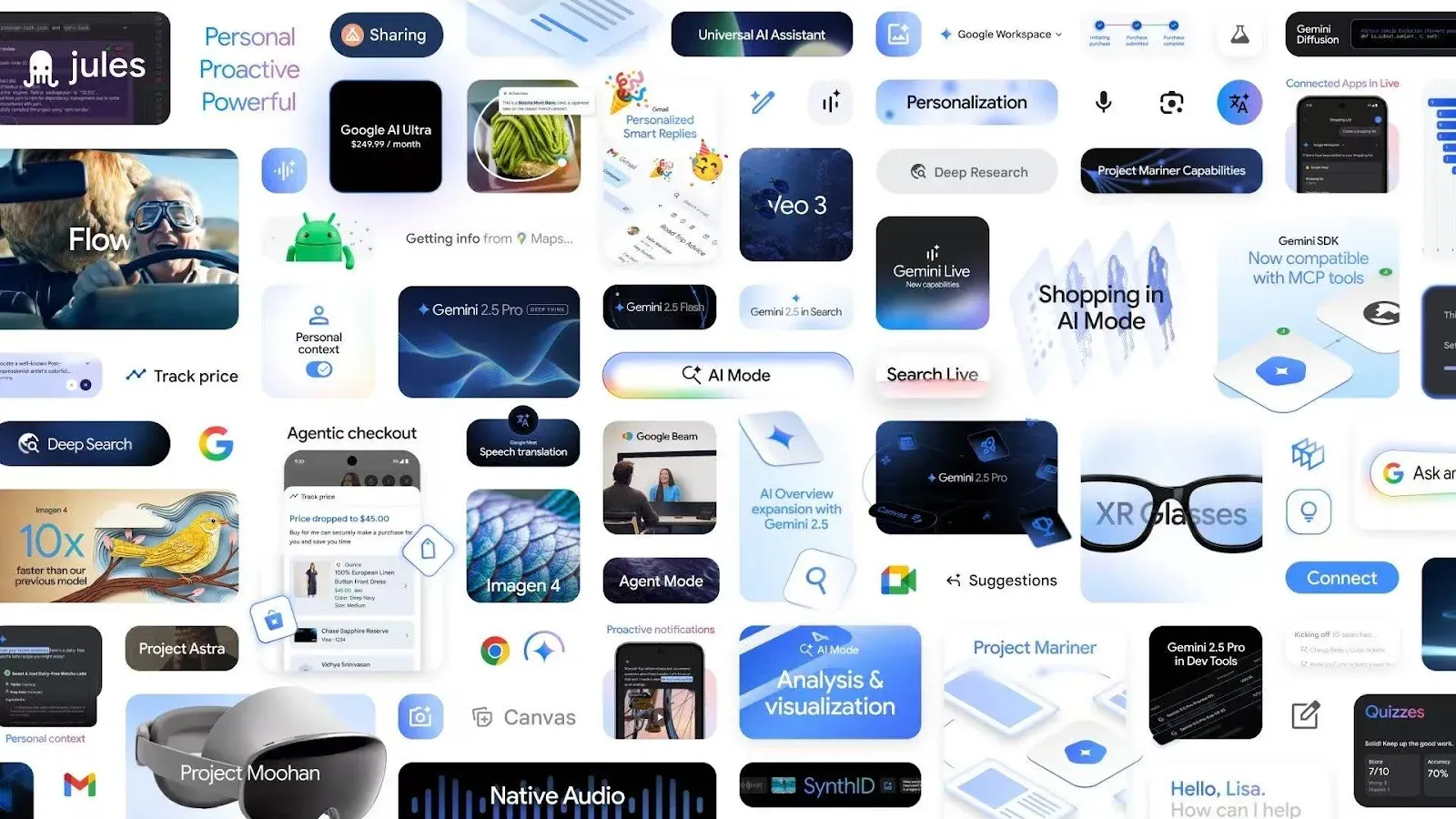
On May 21, 2025, Google held its annual developer conference, I/O 2025, unveiling a suite of AI-first products, tools, and platform enhancements. Below is a high-level summary of the most consequential announcements:
🔍 Search & Shopping Innovations
- AI Search Mode: A fully conversational, multi-turn search experience that provides direct answers, follow-up context, and integrated recommendations in the search results.
- Deep Search: Enhanced contextual search that considers real-time data, including visual and audio inputs, to deliver richer, more relevant results.
- Virtual Try‑On: An advanced visual fitting tool for fashion, allowing users to upload full-body images and see themselves wearing garments with near-photorealistic AI-driven rendering.
- AI-Powered Shopping Recommendations: Personalized product carousels directly integrated into Search and Google Shopping, driven by Gemini AI.
- Price Tracking Notifications: Consumers can now subscribe to price-drop alerts on any listed product, delivered via mobile push or email.
- Agentic Checkout: AI assists in the cart and checkout flow—filling shipping details, applying coupons, and simplifying payment entry.
🤖 AI & Assistant Enhancements
- Gemini 2.5 Pro: Google’s most capable multimodal model yet, excelling at code, vision, language, and reasoning tasks.
- Gemini Live: Real-time AI interactions via camera, microphone, and browser context, enabling tasks like on-the-spot product lookups or translation during live shopping.
- Project Astra Assistant: A prototype proactive assistant with memory and environmental awareness, capable of observing user behavior and suggesting timely actions.
🛠️ Creative & Infrastructure Tools
- Veo 3 / Imagen 4: AI-driven video and image generation platforms for creators and brands.
- Stitch AI: UI design automation that generates code snippets and wireframes from simple text prompts.
- SynthID Watermarking: An open-source tool to embed imperceptible watermarks into AI-generated content for provenance verification.
- Workspace AI: Deep integration of Gemini into Gmail (smart replies), Docs (content suggestions), and Meet (live captions and translations).
📱 Devices & Platform Updates
- Android XR & Smart Glasses: A new wearable form factor combining search, vision, and translation features.
- Android 16 Preview: Material 3 Expressive UI, privacy enhancements, and expanded Gemini integration across TVs, Auto, and Wear OS.
2. Why It Matters for E-Commerce
At first glance, these releases touch many areas—from developer productivity to creative studios. However, several have direct or indirect relevance to online retail, marketing, and customer engagement. To help you quickly grasp which features will impact your bottom line, we’ve synthesized them into the “Google I/O 2025 E-Commerce Impact Matrix by kua.ai.” Review the table below to see how each announcement aligns with your role and objectives.
Google I/O 2025 E-Commerce Impact Matrix by kua.ai
| Feature | Relevance | Beneficiaries | Use Case / Impact |
|---|---|---|---|
| AI Search Mode | ★★★★★ | SEO professionals, Shopify owners, brand operators | Boosts indexing visibility; requires structured content |
| Virtual Try-On | ★★★★★ | Google Shopping advertisers, fashion sellers | Increases conversion rate and enhances interactive experience |
| AI Agent Checkout | ★★★★☆ | DTC brands, Shopify sellers | Reduces bounce rate, simplifies checkout process |
| Price Tracking | ★★★★☆ | Amazon sellers, Walmart sellers | Optimizes pricing and promotion strategies |
| Gemini Live & 2.5 | ★★★★☆ | SaaS platforms, e-commerce sites, content creators | Enables AI-powered content interpretation and automation |
| Project Astra Assistant | ★★★★☆ | Customer service, sales, operations | Multimodal AI assistant supports business operations |
| Stitch AI & SynthID | ★★★☆☆ | Brand content teams | Quickly generates compliant UI/content |
| Android XR Glasses | ★★★☆☆ | Wearable product sellers, virtual try-on providers | Expands use cases and entry points for traffic |
| Workspace AI | ★★☆☆☆ | All e-commerce professionals | Enhances team collaboration and customer service productivity |
3. Deep Dive: Feature-by-Feature Analysis
Below, we dissect each feature’s potential impact on e-commerce. After the core analysis, you’ll find kua.ai comments to highlight strategic takeaways and action points.
3.1 🔍 AI Search Mode
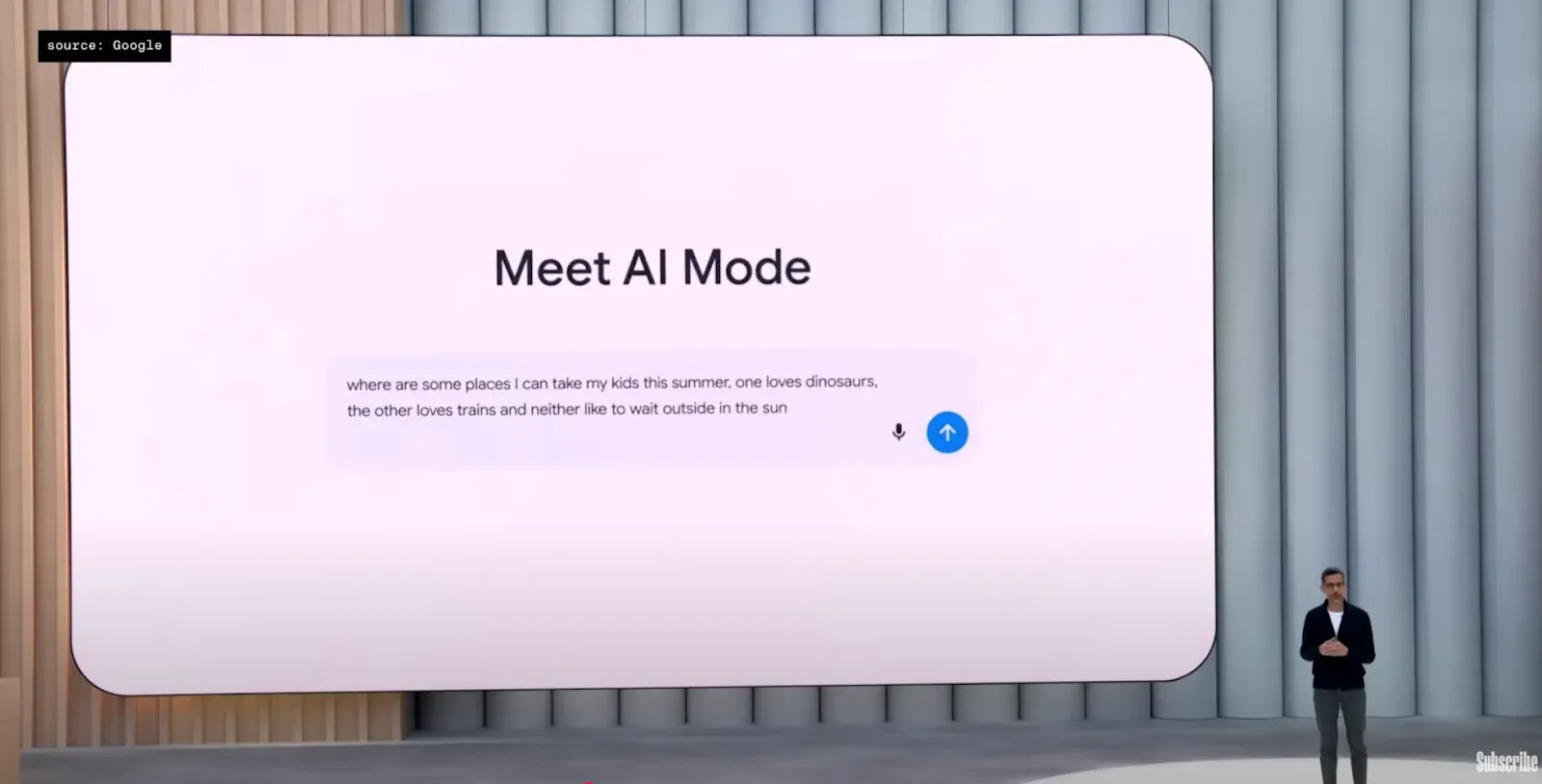
Overview: Google’s AI Search Mode transforms the traditional blue-link search into a conversational interface. Users can ask follow-up questions, and the AI delivers synthesized, context-aware answers, enriched with product suggestions, images, and quick links to purchase pages.
E-Commerce Implications:
- Structured Data Is King: To appear in AI-generated answer boxes, product pages must implement schema markup (Product, FAQPage, Review) and follow clear HTML semantics.
- Content Formatting: Bullet point overviews, Q&A sections, and concise product summaries will be favored.
- AI Crawler Optimization: Traditional SEO must expand to include AI-specific factors, such as external site embeddings, knowledge graph readiness, and relevance signals from user interaction data.
kua.ai comments:
The age of “Click from AI” has arrived. Beyond traditional Google SEO, you must optimize for how your site and content perform within AI-driven interfaces like ChatGPT, Gemini, and other AI chatbots.
This organic traffic is the new gold standard—far higher ROI than paid ads. Crucially, AI crawlers use distinct ranking heuristics, representing virgin territory for sellers and brand owners.
We’re effectively back in 2005. Any e-commerce seller who wants sustainable organic traffic must take this shift seriously now.
clickfrom.ai (by kua.ai) will launch shortly to help Shopify merchants capture organic traffic from all major AI platforms first.
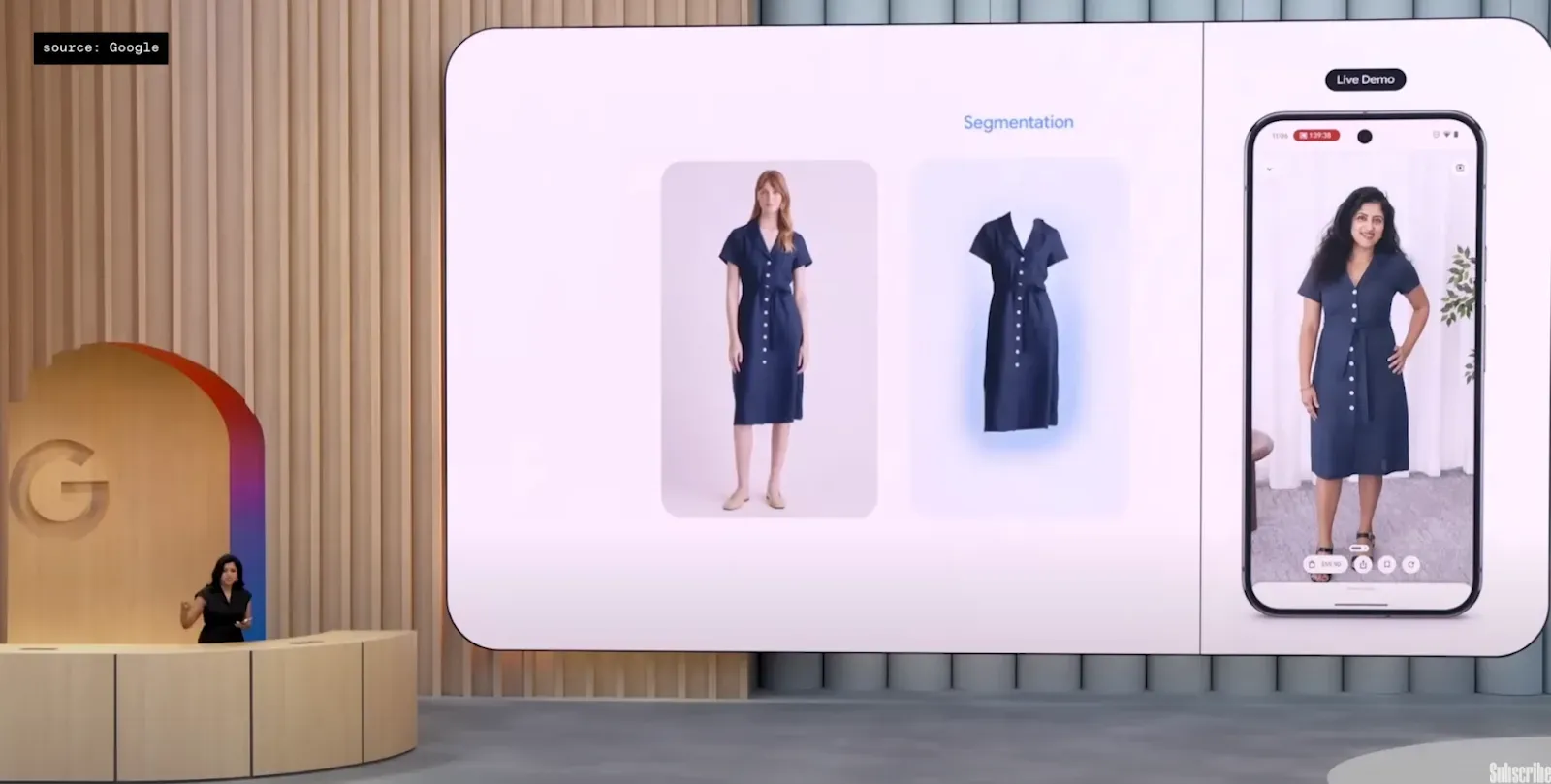
3.2 👗 Virtual Try‑On
Overview: Google Shopping’s Virtual Try-On allows consumers to upload a full-body image and see garments rendered onto their figure, complete with realistic shadows, folds, and cloth movement.
E-Commerce Implications:
- Elevated User Engagement: Extended time-on-site and interactive product exploration.
- Sizing Confidence: Potentially lower return rates for apparel by clarifying fit.
- Integration Considerations: Brands must supply high-quality 3D garment models or leverage Google’s adaptive approximation.
kua.ai comments:
Frankly, fashion e-commerce—especially women’s fast fashion—has long suffered from a race-to-the-bottom syndrome. Low-cost items often misrepresent quality, driving impulse buying but also high return rates.
Virtual Try-On fundamentally slows down impulse decisions by making shoppers more rational—likely reducing conversion rates in the short term, contrary to Google’s claim of boosting conversions.
From the e-commerce seller’s perspective, this feature may face resistance. Widespread adoption depends on consumer comfort and brand willingness to invest in 3D assets.
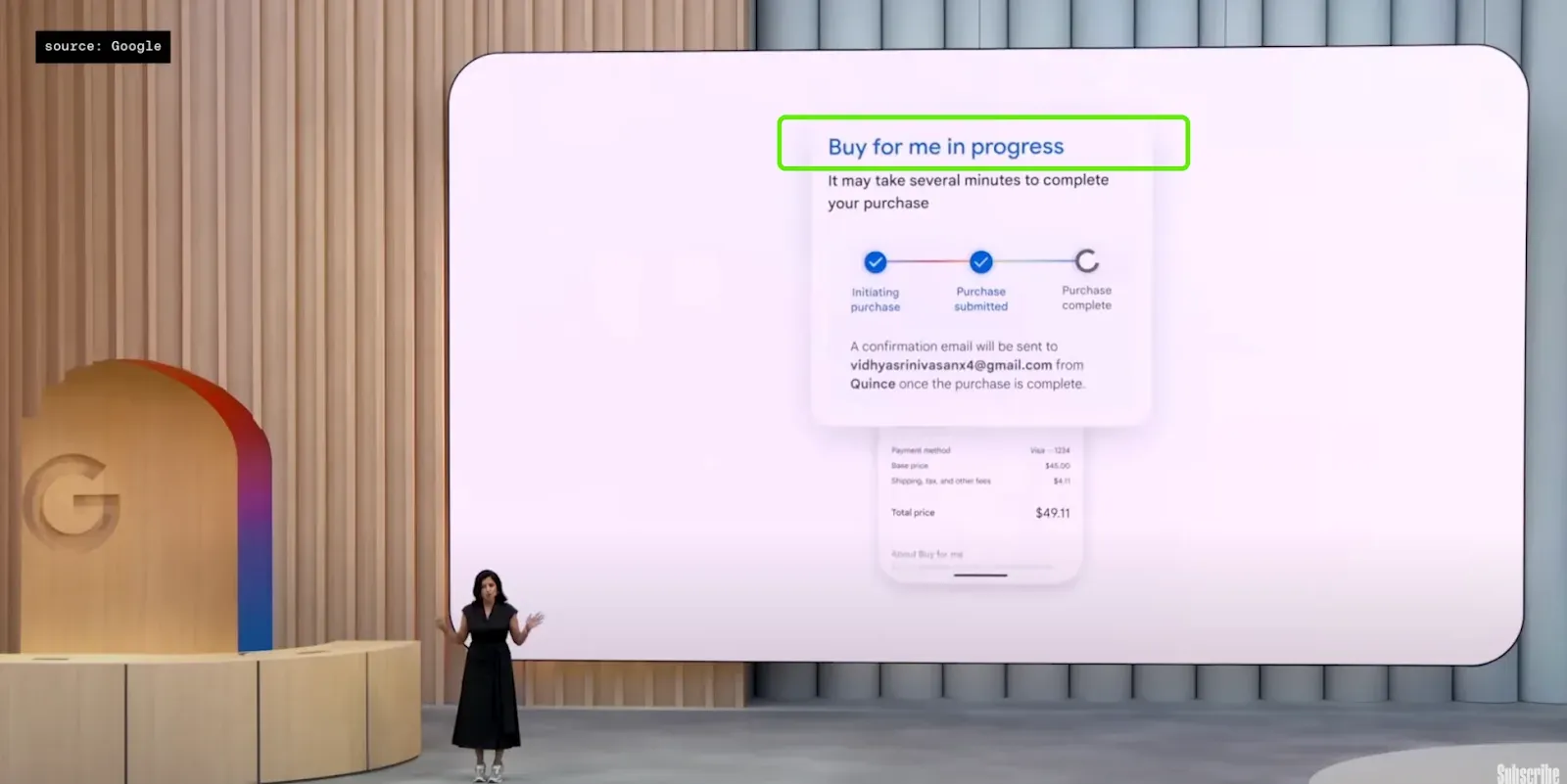
3.3 🛒 AI Agent Checkout
Overview: An AI-powered assistant seamlessly walks customers through the checkout process—filling addresses, selecting shipping options, applying discounts, and completing payment details.
E-Commerce Implications:
- Frictionless Checkout: Drastically reduced form abandonment rates.
- Coupon Optimization: Automated coupon application ensures maximum savings.
- Cross-Platform Consistency: Works on desktop, mobile web, and in-app purchases.
kua.ai comments:
This is distinctly seller-friendly. Reducing checkout friction directly elevates conversion rates.
Sellers must now focus on optimizing Google Merchant Center feeds to align with AI Agent’s recommendation logic. Many brands are turning to a google shopping management agency to handle feed optimization and performance at scale.It’s no longer just feed hygiene; it’s feed intelligence.
Stay tuned for our upcoming deep-dive guide on feed optimization for AI-driven checkout.
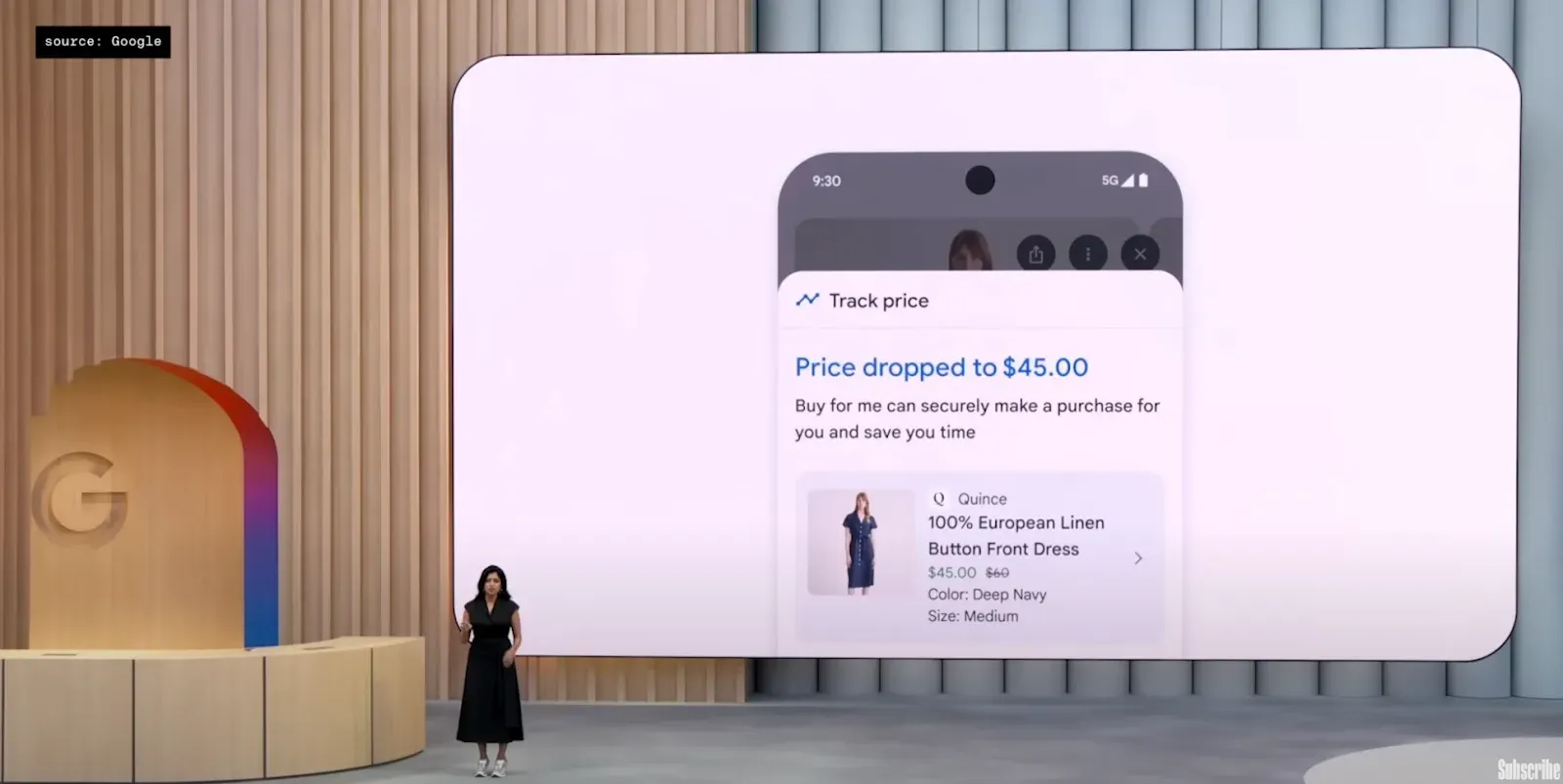
3.4 💲 Price Tracking Notifications
Overview: Consumers can subscribe to price-drop notifications for products listed on Google Shopping. Alerts are delivered via email or mobile, encouraging purchase when the price hits a preferred threshold.
E-Commerce Implications:
- Delayed Purchases: Consumers may hold off until notified of a price drop, extending the sales cycle.
- Promotion Strategy Shifts: Traditional limited-time offers may lose urgency.
- Competitive Pricing Pressure: Sellers must monitor competitors closely to avoid losing sales to lower-priced alternatives.
kua.ai comments:
From a seller’s vantage point, Price Tracking shifts bargaining power to consumers, allowing them to game pricing cycles.
Unless merchants can opt out or customize notification parameters, this feature risks undermining flash sales and urgency-driven promotions.
Clarification from Google on merchant controls is needed.
3.5 📸 Gemini Live & Gemini 2.5
Overview: Gemini 2.5 Pro is Google’s latest flagship AI model, now with enhanced multimodal capabilities. Gemini Live enables real-time interactions using camera, microphone, and web context—turning your phone into an AI-powered assistant for live product searches, image recognition, and translation.
E-Commerce Implications:
- Rich Media SEO: Video-first and image-rich product pages will receive preferential weighting in AI-driven discovery.
- Interactive Shopping: Live demonstrations and in-store AR experiences can be transcribed and understood by Gemini for seamless purchase links.
- Content Automation: Automated generation of product descriptions, visual tags, and video summaries becomes feasible at scale.
kua.ai comments:
Historically, video content has underperformed due to limited model understanding. Gemini 2.5 dissolves that barrier.
Prepare for a renaissance of branded video and AR experiences. High-quality product videos and tutorials will be elevated in both search and AI chat interfaces.
Investing in video production and metadata tagging now could pay dividends as Gemini’s multimodal ranking matures.
3.6 🤖 Project Astra Assistant
Overview: Project Astra is an experimental AI agent that proactively observes user behavior—such as browsing patterns or calendar events—and offers contextually relevant suggestions or actions.
E-Commerce Implications:
- Proactive Promotions: Astra could remind users of abandoned carts or upcoming sales based on browsing history.
- Contextual Upsells: AI-driven prompts during content consumption (e.g., “Need new hiking boots? Check out these top-rated pairs”).
- Customer Support Innovations: Automated real-time help suggestions during checkout or product research.
kua.ai comments:
While still in prototype, Project Astra foreshadows a future where AI not only responds to queries but anticipates needs.
Brands should explore early integrations—like chat widgets or SDKs—to pilot proactive suggestions and gauge customer reception.
3.7 🛠️ Stitch AI & SynthID
Overview: Stitch AI generates UI layouts and code from text prompts, while SynthID embeds watermarks into AI-generated images and videos for content authenticity.
E-Commerce Implications:
- Rapid UI Prototyping: E-commerce teams can produce landing pages and A/B test variants in minutes.
- Brand Safety: Watermarked AI assets maintain provenance, reducing risks of unauthorized content use or deep-fake complaints.
kua.ai comments:
Leverage Stitch AI for rapid landing page testing and iteration—cut design-to-launch timelines drastically. UX Prototyping Layer Tip: In parallel with Stitch AI’s UI generation, Alloy is used by product teams to prototype high-fidelity, design-system-accurate interfaces, allowing checkout and account flows to be reviewed and tested visually before development.
Adopt SynthID to affirm content authenticity and protect brand integrity in influencer campaigns and product demos.
3.8 📲 Android XR Glasses
Overview: A new wearable powered by Android XR, combining search, AR translation, and live camera-based shopping features in a glasses form factor.
E-Commerce Implications:
- In-Store AR Integration: Enables smart assistants in brick-and-mortar settings to overlay product details and reviews.
- Virtual Showrooms: Wearable-driven immersive shopping experiences that tie back to online catalogs.
- Hands-Free Commerce: Voice-activated, vision-enabled purchases while on the move.
kua.ai comments:
Keep an eye on pilot programs integrating Android XR Glasses into retail showrooms.
Brands that prepare AR-optimized 3D product assets now will lead in omnichannel experiences.
3.9 ☁️ Workspace AI
Overview: Gemini-powered enhancements across Google Workspace—smart Gmail replies, real-time Meet translations, and Docs content suggestions.
E-Commerce Implications:
- Operational Efficiency: Streamlines internal workflows for marketing teams, customer service, and product operations.
- Global Communication: Live translation in Meet fosters smoother engagement with international suppliers and partners.
- Content Quality: Automated copy suggestions in Docs help produce polished blog posts, product descriptions, and ad copy faster.
kua.ai comments:
While not directly revenue-driving, Workspace AI is a force multiplier for e-commerce teams.
Lower friction in content production and cross-border collaboration frees resources for strategic growth initiatives.
4. Strategic Recommendations for E-Commerce Leaders
- Audit Your Structured Data: Ensure all product pages include up-to-date schema markup. Focus on Product, Offer, Review, and FAQ schemas.
- Invest in Multimedia Assets: Prioritize high-quality product videos, 3D models, and AR-ready assets to capitalize on Gemini’s multimodal intelligence.
- Optimize for AI Crawlers: Beyond traditional SEO, test how your pages appear in AI chatbots. Refine prompts and content blocks to encourage AI referrals.
- Monitor Consumer Behavior: Track adoption metrics for Virtual Try‑On and Price Tracking alerts to understand how they affect your conversion funnels.
- Prepare for Proactivity: Prototype early integrations with Astra-like chatbots to capture abandoned cart rescues and contextual recommendations.
- Leverage AI for Operations: Use Stitch AI for rapid UI experimentation and Workspace AI to accelerate internal processes.
Check more insights for sellers in 2025: Have a seat labubu: How can e-commerce sellers profit from trending pop culture products like Labubu?